
Heat tint is one of the most common issues encountered after welding stainless steel.
Those blue, gold, purple and brown colours that appear around a weld may look harmless, but they indicate that the surface of the stainless steel has been altered by heat. Left untreated, heat tint can reduce corrosion resistance and increase the risk of staining, pitting and premature surface corrosion.
The good news is that heat tint can be removed quickly and effectively when the correct method is used.
What Is Heat Tint?
Heat tint is a layer of oxide that forms when stainless steel is exposed to high temperatures during welding.
The colour depends on the temperature reached and the amount of oxygen present during the welding process.
Common colours include:
- Light straw
- Gold
- Purple
- Blue
- Dark grey
- Black
In general, darker colours indicate heavier oxidation and a greater reduction in corrosion resistance.
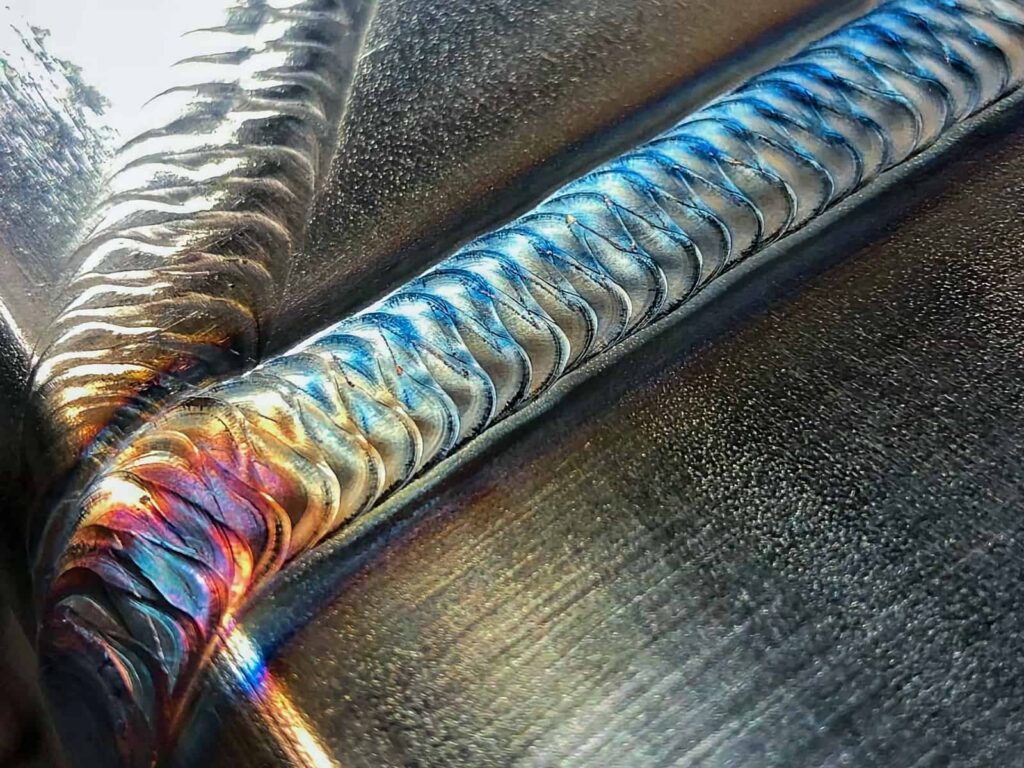
Image Description: Close-up photograph showing stainless steel TIG welds with increasing levels of heat tint from straw through gold, purple, blue and black oxidation.
Why Heat Tint Should Be Removed
Many fabricators focus on appearance, but the real issue is corrosion performance.
Stainless steel resists corrosion because of a thin chromium-rich passive layer on the surface. During welding, this protective layer is disrupted.
If heat tint remains:
- Corrosion resistance is reduced
- Tea staining can occur
- Surface contamination is more likely to cause problems
- Weld areas often become the first place corrosion appears
This is particularly important in:
- Food processing equipment
- Pharmaceutical equipment
- Dairy processing systems
- Marine environments
- Architectural stainless steel
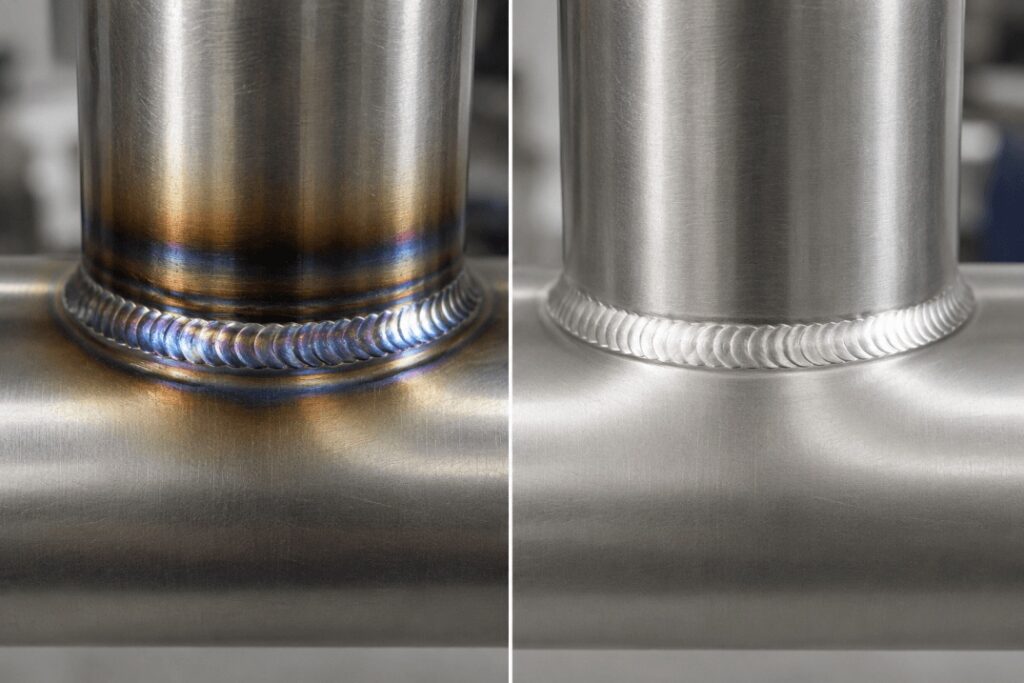
Image Description: Split-screen image showing a clean stainless steel weld next to a corroded and tea-stained weld that was not properly cleaned after welding.
Common Methods for Removing Heat Tint
Grinding and Abrasives
Grinding discs, flap wheels and abrasive pads can remove visible discolouration.
Advantages:
- Widely available
- Familiar process
Disadvantages:
- Can alter the surface finish
- Risk of contamination
- Difficult in corners and pipework
- Often requires additional polishing
Grinding removes colour but does not necessarily restore corrosion resistance.
Pickling Paste
Pickling paste chemically removes oxides from the weld area.
Advantages:
- Effective heat tint removal
- Can improve corrosion resistance
Disadvantages:
- Hazardous chemicals
- Longer process time
- Requires careful handling and disposal
- Additional rinsing and cleaning required
Electrochemical Weld Cleaning
Electrochemical weld cleaning combines electrical current, a carbon fibre brush and a specialised cleaning fluid.
This process removes heat tint quickly while helping restore the surface condition needed for passivation.
Advantages:
- Fast
- Consistent results
- Minimal surface damage
- Suitable for visible stainless steel
- Helps restore corrosion resistance
For many fabricators, it has become the preferred method of post-weld treatment.
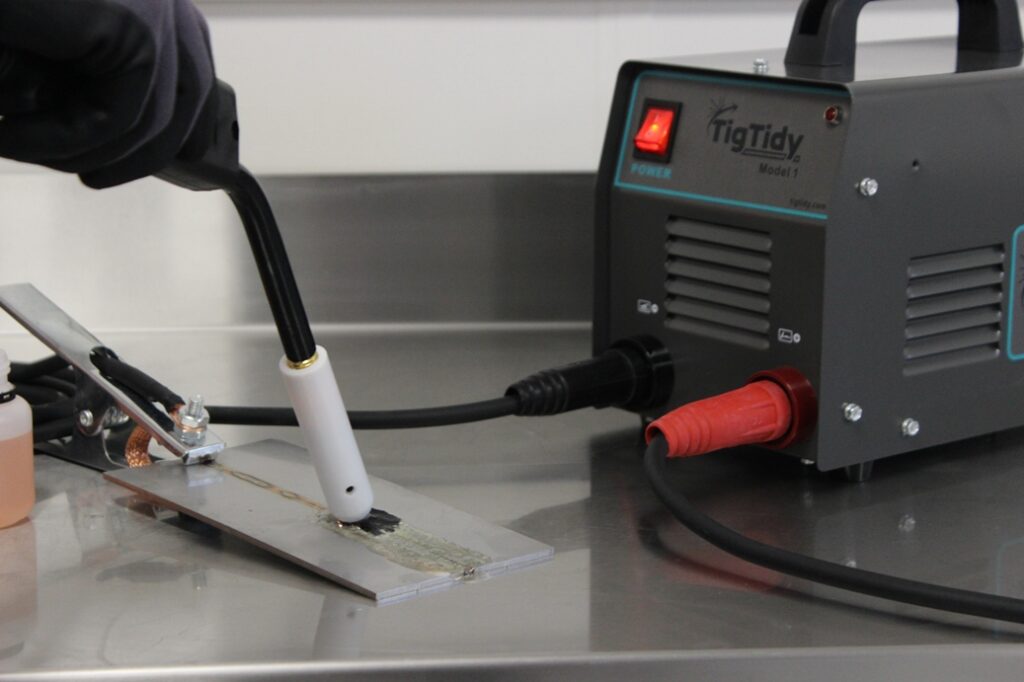
Image Description: Operator using a TigTidy Model 1 and carbon fibre brush to remove blue heat tint from a stainless steel TIG weld.
Watch Heat Tint Removal in Action
The video below demonstrates how electrochemical weld cleaning removes weld discolouration from stainless steel.
How to Remove Heat Tint Using TigTidy
Step 1 – Connect the Equipment
Attach the ground clamp securely to the workpiece.
Ensure there is clean metal-to-metal contact.
Step 2 – Wet the Brush
Apply WCL cleaning fluid to the TidyBrush carbon fibre brush.
The brush should remain wet throughout the cleaning process.
Step 3 – Clean the Weld
Move the brush steadily across the weld and surrounding heat affected zone.
Allow the electrical current and cleaning fluid to do the work. Excessive pressure is not required.
Step 4 – Inspect the Surface
Continue until all visible heat tint has been removed.
The weld should appear clean and bright.
Step 5 – Electropolish (Optional)
For a brighter finish, continue working over the weld for a longer period.
This can improve appearance on visible stainless steel fabrications.
[IMAGE PLACEHOLDER 4]
Image Description: Series of four photographs showing the complete process from heat-tinted weld, brush application, cleaning in progress and finished weld.
Preventing Heat Tint in the First Place
While post-weld cleaning is important, good welding practices help minimise heat tint.
Consider:
- Proper shielding gas coverage
- Adequate purge gas on pipework
- Clean base material
- Correct welding parameters
- Avoiding excessive heat input
The less heat tint created during welding, the faster the cleaning process will be.
The Best Way to Remove Heat Tint
The ideal method depends on the application, finish requirements and production environment.
For many modern stainless steel fabricators, electrochemical weld cleaning offers the best combination of:
- Speed
- Finish quality
- Corrosion resistance
- Operator safety
- Ease of use
The goal is not simply to remove colour.
The goal is to restore the stainless steel so it looks better, performs better and remains corrosion resistant long after the job leaves the workshop.
Frequently Asked Questions
Is heat tint harmful?
Heat tint itself is not harmful, but it indicates that the corrosion-resistant surface of the stainless steel has been altered.
Can I leave blue weld marks on stainless steel?
In some applications it may be acceptable, but corrosion resistance can be reduced. Most professional fabricators remove heat tint after welding.
Does grinding restore passivation?
Grinding removes material and discolouration but does not automatically restore the surface condition required for optimal corrosion resistance.
What is the fastest way to remove heat tint?
Electrochemical weld cleaning is widely considered one of the fastest and most effective methods for removing heat tint from stainless steel welds.
Can TigTidy remove black heat tint?
Yes. TigTidy is designed to remove light and heavy weld oxidation from stainless steel surfaces.