Walk into almost any stainless steel fabrication shop and you’ll find grinders, flap discs, polishing wheels, and abrasives being used to clean welds.
For decades, that’s simply been how the job was done.
But a growing number of fabricators are moving away from abrasive methods and towards electrolytic weld cleaning with carbon fibre brushes. The reason is simple: it delivers cleaner welds, restores corrosion resistance, and often saves time in the process.
What Happens to Stainless Steel During Welding?
When stainless steel is welded, the intense heat affects more than just the weld bead itself.
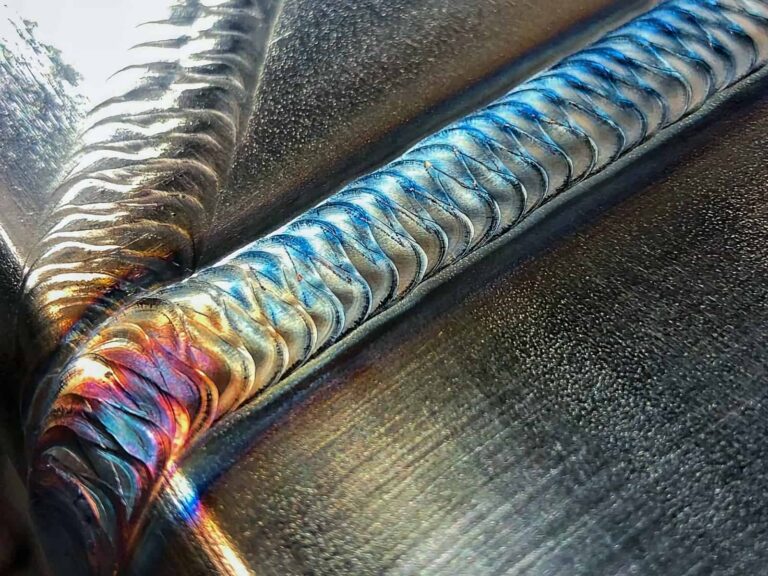
The surrounding heat-affected zone develops visible oxidation, commonly known as heat tint. Depending on the temperature reached, this can appear as straw, blue, purple, grey, or even black discolouration.
While many welders view heat tint as a cosmetic issue, it represents something more important: the protective passive layer of the stainless steel has been compromised.
Without proper post-weld treatment, these areas become more susceptible to:
- Tea staining
- Surface corrosion
- Pitting
- Premature deterioration
Especially in outdoor, coastal, food processing, pharmaceutical, and marine environments.
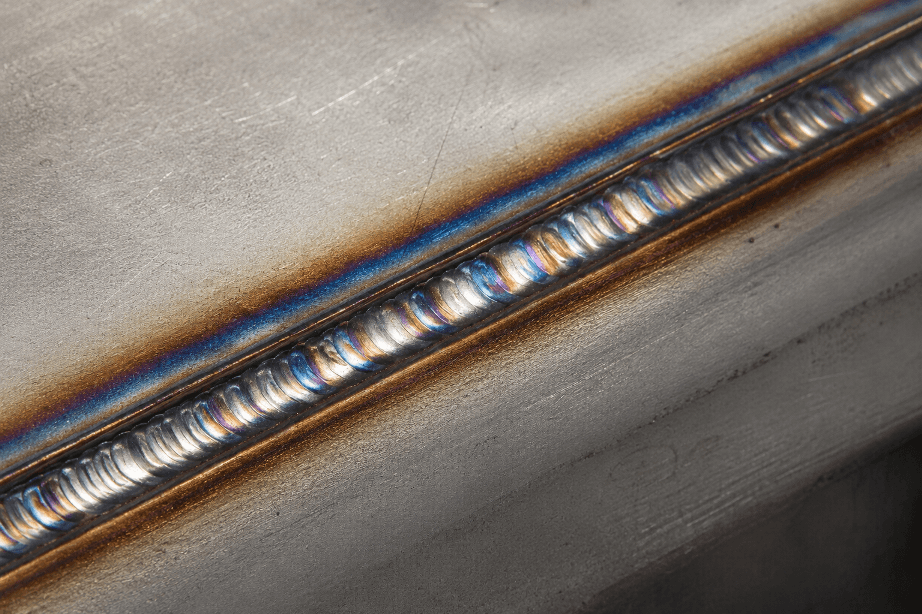
Image Description: Close-up photograph of a TIG weld showing blue and brown heat tint on stainless steel before cleaning.
Why Grinding Isn’t Always the Best Solution
Grinding and abrasive cleaning certainly remove visible discolouration.
The problem is that they can also:
- Alter the surface finish
- Leave visible grinding marks
- Embed contamination into the surface
- Create inconsistent results between operators
- Struggle in corners, joints, and difficult-to-reach areas
On architectural stainless steel, where appearance matters as much as performance, this can create additional rework and finishing costs.
Many fabricators spend more time blending and refinishing weld areas than they do welding them.
How Electrolytic Weld Cleaning Works
Electrolytic weld cleaning uses three key elements:
- A low-voltage electrical current
- A specially formulated cleaning electrolyte
- A carbon fibre brush
When the wetted brush passes over the weld, the electrical current and cleaning fluid work together to remove oxides and contamination from the surface.
Unlike grinding, the process is not removing material mechanically. Instead, it cleans the surface at a chemical level while helping restore the conditions needed for natural passivation.
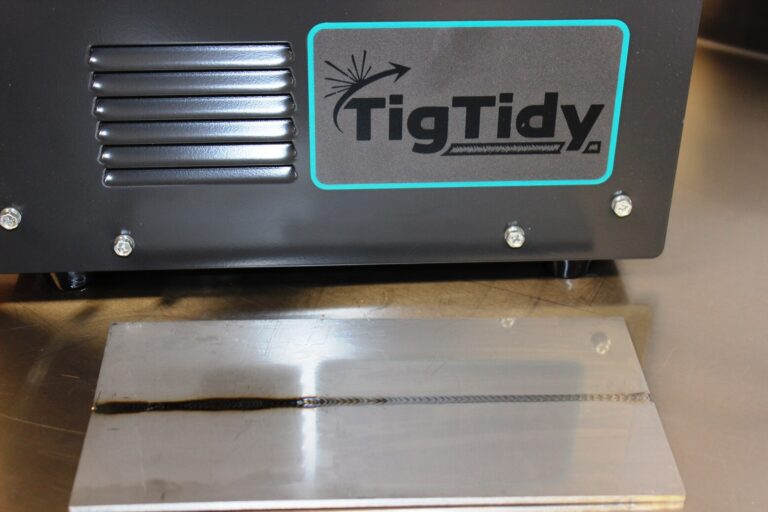
The result is a bright, clean weld with improved corrosion resistance.
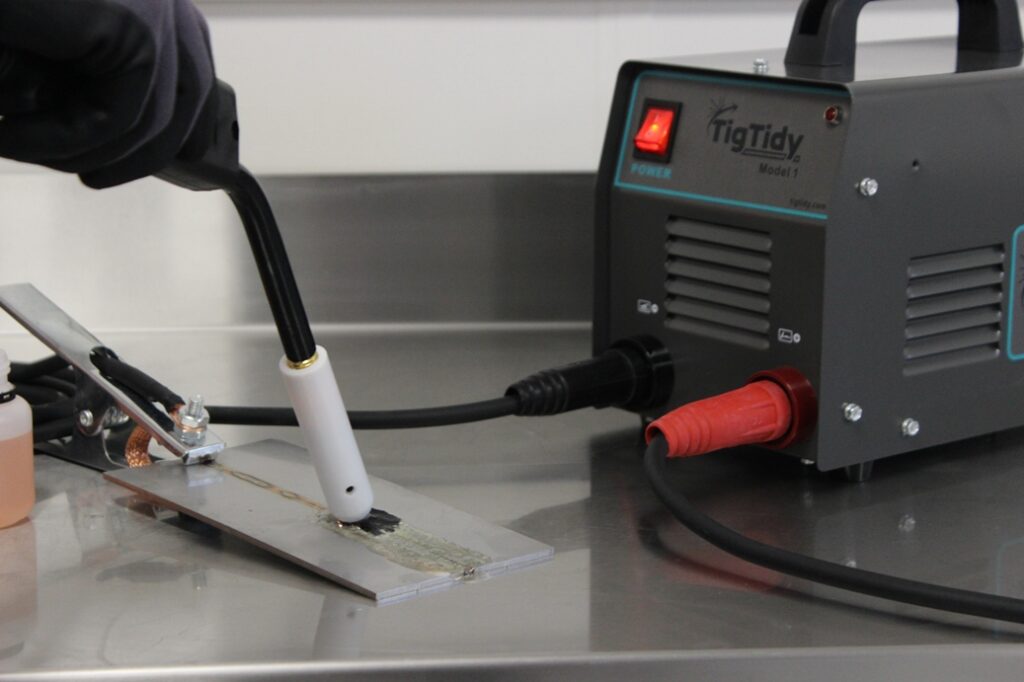
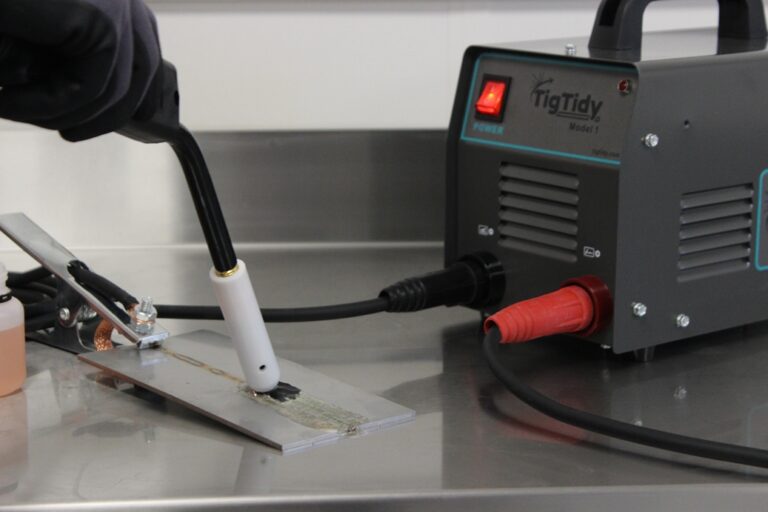
Image Description: Operator using a TigTidy weld cleaning machine and carbon fibre brush on a stainless steel TIG weld.
The Importance of Passivation
Many people talk about weld cleaning. Fewer talk about passivation.
Stainless steel stays corrosion resistant because a microscopic chromium-rich oxide layer forms naturally on the surface. This is known as the passive layer.
When welding disrupts that layer, corrosion resistance decreases.
Effective electrolytic weld cleaning removes contaminants and oxides that prevent the passive layer from reforming properly.
That means you’re not just making the weld look better.
You’re helping the stainless steel perform the way it was designed to.
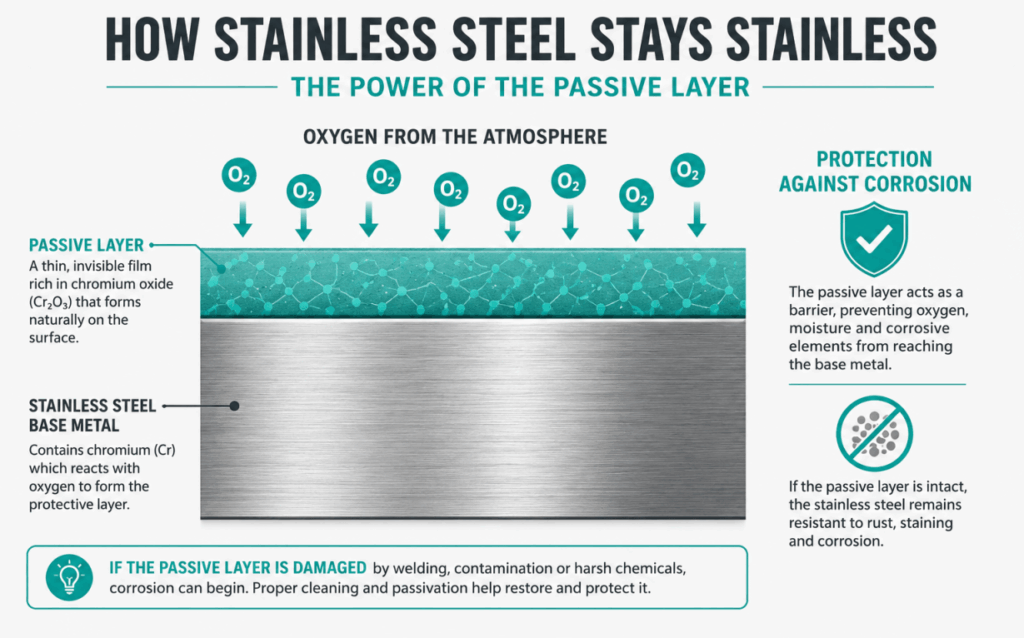
Image Description: Simple infographic showing the stainless steel base metal, passive layer, oxygen from the atmosphere, and protection against corrosion.
Where Electrolytic Weld Cleaning Delivers the Biggest Benefits
Electrolytic weld cleaning is particularly valuable for:
- Architectural stainless steel
- Handrails and balustrades
- Food and beverage equipment
- Pharmaceutical process systems
- Marine fabrications
- Decorative stainless steel projects
- Tanks and pressure vessels
In these applications, appearance and corrosion resistance are equally important.
A clean-looking weld that corrodes six months later isn’t a successful outcome.
The Future of Stainless Steel Weld Finishing
As customer expectations increase and stainless steel applications become more demanding, fabricators need finishing methods that do more than improve appearance.
Electrolytic weld cleaning with a carbon fibre brush offers a faster, cleaner, and more technically effective way to finish stainless steel welds.
The goal isn’t simply to remove heat tint.
The goal is to restore the stainless steel’s ability to resist corrosion, maintain its appearance, and deliver long-term performance.
That’s why more fabricators are making the switch.
And once they’ve seen the results, few go back.