If you weld stainless, you already know the problem: the weld might be structurally perfect, but the finish tells a different story. Heat tint and oxide staining make a job look unfinished, and getting back to a clean, consistent surface often eats more time than the welding did.
This post explains what electrolytic weld cleaning is, why it’s become the go-to alternative to abrasives and pickling paste, and what to look for in a system that actually makes sense for a small fabrication shop.
What is heat tint, and why does it matter?
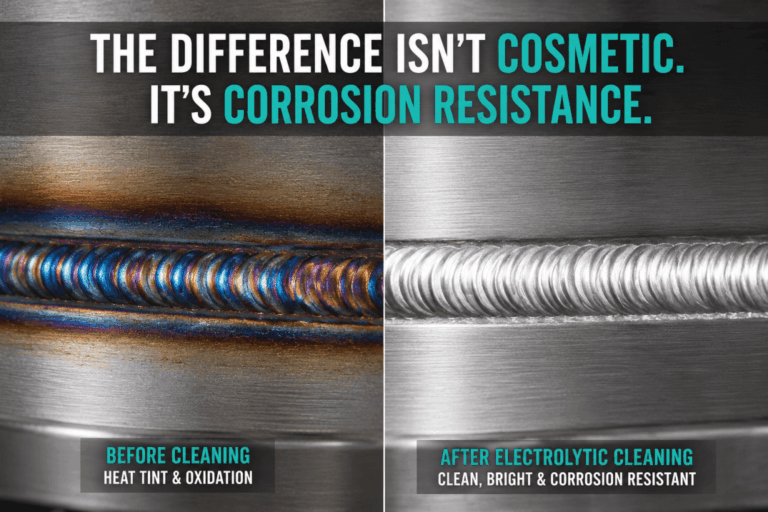
When stainless steel is heated during welding, the surface oxidises. That’s what creates the brown, blue, and black discoloration around the seam.
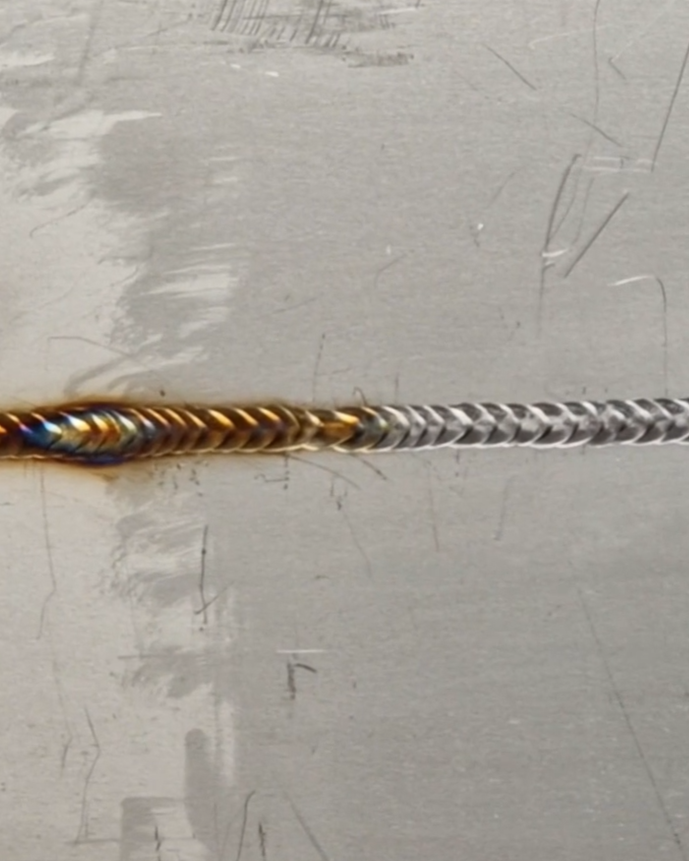
Two things happen after that:
- Cosmetics: the weld looks “dirty” even when it’s good.
- Finishing time explodes: you end up grinding, blending, and chasing a uniform look across a whole job.
In higher-spec work (food, pharma, architectural, marine), finish consistency is part of quality. Even in general fabrication, customers judge the job with their eyes.
The three common ways people deal with weld tint
1) Abrasives (grinding / flap wheels / Scotch-Brite)
Pros: universally available, no chemicals.
Cons: slow, noisy, operator-dependent, easy to create uneven finish or “overwork” the grain. It also becomes a rabbit hole: you remove tint, then you need to blend, then match the surrounding finish.
2) Pickling paste
Pros: can be effective and familiar.
Cons: messy handling, extra cleanup, and it’s not a fun thing to keep around the workshop. Many shops use it because it works, not because they like it.
3) Electrolytic weld cleaning (brush + fluid + controlled current)
Pros: fast, controlled, repeatable, clean workflow, great for small areas and weld lines.
Cons: you need a proper system (machine + brush + correct fluids) and you still need to treat the process with respect (SDS + PPE).
For most small stainless shops, electrolytic cleaning hits the sweet spot: faster than abrasives, less hassle than paste, and consistent enough to standardise across the team.
How electrolytic weld cleaning works
Electrolytic cleaning uses:
- a specialised fluid,
- a carbon-fibre brush,
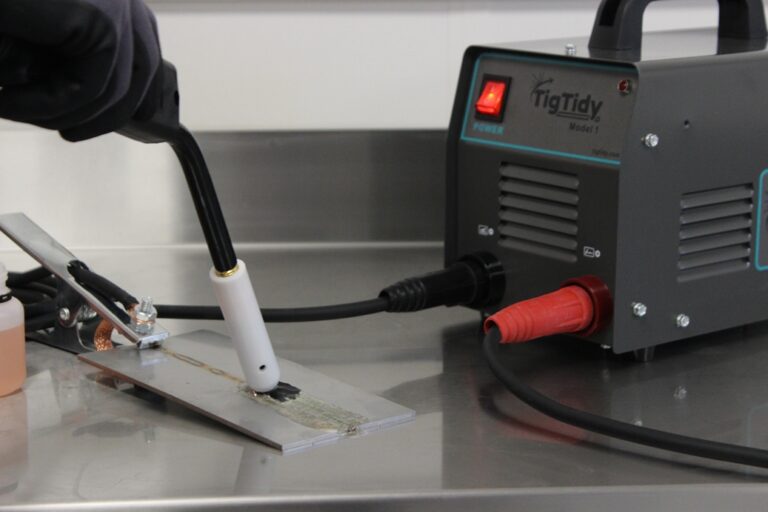
- and controlled electrical current through the brush at the weld line.
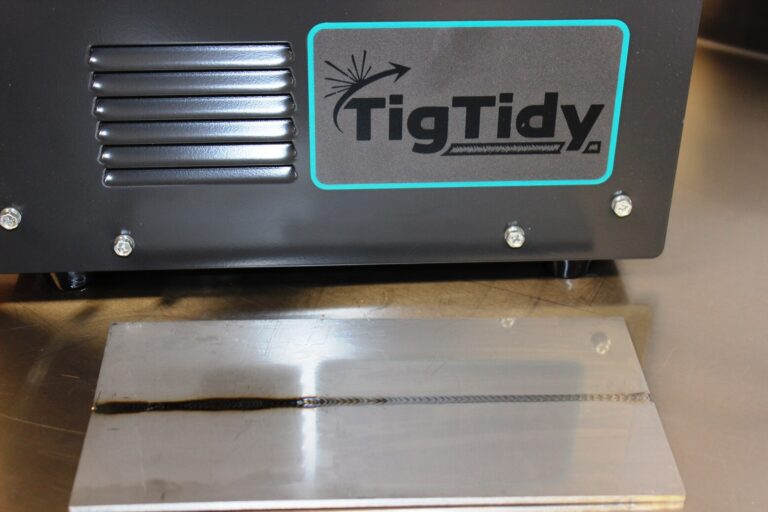
You’re not “polishing” the whole part. You’re cleaning the affected area around the weld in a controlled way. The result is a cleaner seam and a more consistent finish, with far less time spent blending and chasing the grain.
The practical workflow is simple:
- Dip the brush in the fluid
- Brush along the weld seam
- Wipe and rinse/neutralise as instructed
That’s the whole point: a repeatable process you can teach fast.
Why small shops are adopting it faster now
Historically, electrolytic systems were priced and positioned like specialist equipment. Great results, but not an easy purchase for a small shop.
That has shifted. More fabricators want:
- a clean finish without turning one weld into a 30-minute finishing job,
- a process they can use daily, not just on “special jobs,”
- and a system that doesn’t feel like they’re paying for a premium badge.
The real driver isn’t technology. It’s the economics of time: finishing is the hidden cost in stainless work.
What to look for in an electrolytic weld cleaner (especially if you’re budget-conscious)
If you’re buying for a real workshop, not a brochure, focus on this:
1) Simplicity beats features
You want a tool that’s productive fast. Minimal controls, clear steps, and a workflow your team will actually follow.
2) Consumables should be stocked and affordable to use every day
This is where some brands quietly punish you. If consumables feel “precious,” people stop using the system and go back to abrasives.
Look for:
- clear refill availability,
- brush packs,
- and a straightforward system (not a mystery chemical ecosystem).
3) Real support matters
Most finishing problems aren’t “the machine.” They’re:
- wrong brush pressure,
- wrong fluid selection for the surface,
- not neutralising/rinsing properly,
- or trying to use the process on the wrong material/coating.
A good dealer network that stocks consumables and can give basic training is worth more than another feature on the panel.
4) Honest application boundaries
Any brand that claims it works perfectly on everything is selling hype.
A good supplier will tell you:
- what it’s designed for (stainless weld cleaning),
- where it struggles (heavy scale, unknown coatings, non-stainless surfaces),
- and what to do instead.
Where TigTidy fits in (and why we built it)
TigTidy exists for one reason: real-world stainless fabrication needs a practical finishing tool that doesn’t come with premium-brand overhead.
The TigTidy system is built around:
- simple controls and a clear process (minimal training required),
- a workflow that’s safe and predictable when used with SDS/PPE guidance,
- and low running costs so you can justify using it on every job.
It’s designed to be used daily in busy workshops and on-site jobs—without slowing you down or turning finishing into a separate project.
“Is it hard to use?” No — that’s the point.
Most users are productive in minutes because there’s no complicated setup:
- brush the seam,
- wipe,
- rinse/neutralise as instructed.
A short walkthrough from a dealer is usually all it takes to get consistent technique—especially if you’re matching a brushed grain or doing cosmetic work.
Safety: do it properly, every time
Electrolytic weld cleaning is not “dangerous,” but it is industrial work: electricity + chemical fluids. Treat it like a professional process:
- follow the SDS,
- use appropriate PPE,
- keep the work area sensible (ventilation, surface protection),
- and follow the wipe/rinse/neutralise steps.
If you’re in a regulated environment (food, pharma, drinking-water components), your internal QA rules may require validation beyond normal fabrication practice. We provide documentation; you validate to your standards.
Where to buy
TigTidy is sold through a network of authorised dealers globally. Dealers don’t just sell the machine:
- they stock consumables and key wear parts,
- provide support and basic training,
- and help you choose the right setup for your work.
If you want your nearest dealer, contact us and we’ll connect you.
Quick decision checklist
If these are true, electrolytic cleaning is probably a strong fit:
- you weld stainless regularly,
- you care about finish consistency,
- finishing time is killing margin,
- you want a process your team can standardise.
If you’re unsure, send a photo of the weld and the stainless grade (if you know it). You’ll get a straight answer.